
Earthquake Retrofit in Los Angeles, CA
As a top rated contractor that provides earthquake retrofitting services, we will go over what it is, what are the benefits, why you should choose us, and some pictures from previous earthquake retrofitting projects
Have any questions or want to book a free inspection and quote? Feel free to call us at (818) 492-4195.


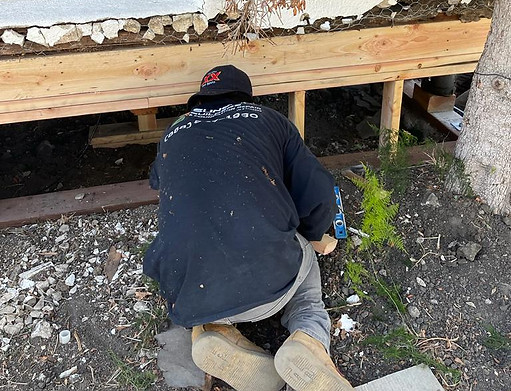
What is earthquake retrofitting?
The primary purpose of earthquake retrofitting is to keep your home from being displaced from its concrete foundation, making the dwelling safer and less prone to major structural damage during a seismic event. During an earthquake, the ground can shift rapidly from side to side, creating intense lateral forces that push and pull on a structure. If a home is not properly secured, it can slide, shift, or even collapse off its foundation.
Retrofitting strengthens the connection between the wood framing and the concrete foundation, helping the structure move more as a single, unified system rather than separating under stress. In addition to preventing displacement, earthquake retrofitting significantly reduces the risk of costly repairs, interior damage, and potential injury to occupants. By reinforcing critical structural components such as anchor bolts and cripple walls, retrofitting improves overall stability and helps preserve the integrity of the home. In high-risk seismic regions, this added structural reinforcement provides both financial protection and peace of mind, ensuring the home is better prepared to withstand unexpected ground movement.

What are the benefits of earthquake retrofitting a house?
• Homes that are properly retrofitted increase both the safety of the residents and the structure during a seismic event.
By strengthening the connection between the home’s framing and its concrete foundation, retrofitting helps prevent shifting or collapse during an earthquake. This added stability reduces the risk of serious structural damage and improves overall occupant safety.
• Retrofitting your home can help increase its overall property value.
In earthquake-prone areas, buyers recognize the importance of structural reinforcement. A retrofitted home can be seen as a safer, lower-risk investment, which may improve marketability and buyer confidence.
• Many insurance companies require or strongly recommend seismic retrofitting to qualify for certain policies.
Homes that are not properly secured to their foundations may be considered higher risk. Completing a retrofit can make it easier to obtain earthquake insurance coverage and avoid potential coverage limitations.
• Homeowners may save 10% to 15% on insurance premiums after retrofitting.
Because a retrofitted home is less likely to suffer severe structural damage, insurers may offer discounted rates. Over time, these savings can help offset part of the retrofit investment. Some insurance providers discount earthquake insurance specifically in which case homeowners can see up to 25% off.
Why choose us to earthquake retrofit your home?
1. Over 3,300 Houses Retrofitted
We are nothing short of experience, our team has completed over 3,300 seismic retrofitting jobs and have many more to come!
2. 35+ Years of Experience
For over the course 35 years, the team at Sunshine Foundation Repairs have retrofitted homes at the highest level of quality!
3. Over 600 five star reviews
Our past customers couldn't be happier with our services, as shown with our 600+ five star reviews throughout multiple platforms such as Google, Yelp, Home Advisor, Angie, Houzz, BuildZoom, and Porch. Check out our reviews online!
4. Financing Available
We at Sunshine Foundation Repairs understand that not everyone has the complete funds for a Seismic Retrofitting. So we build and offer the financing plan that is perfect for you!

Questions We Get Asked All The Time (FAQ's)
1. How do I know if my home needs to be earthquake retrofitted?
Homes built before the mid-1980s are more likely to need retrofitting, especially if they have a raised foundation, short cripple walls, are not bolted to the foundation, or live in an earthquake prone area. You can usually check inside your crawl space to see whether anchor bolts and plywood shear panels are present. A professional inspection is the most reliable way to determine vulnerability.
2. How long does a typical retrofit take?
Most standard single-family home retrofits can be completed in 2 to 5 days, depending on the size of the home and existing conditions. Larger homes or homes requiring additional structural corrections may take longer. The process typically does not require you to move out.
3. How much does earthquake retrofitting cost?
Seismic retrofits typically cost between $4,000-$7,000, but vary depending on the home’s size, foundation type, and structural condition. For certain, retrofits are a lot more affordable than rebuild damage after an earthquake. An on-site inspection is the best way to receive an accurate estimate.
4. Do I need permits to retrofit my house?
Yes, in most cities a building permit is required for earthquake retrofitting. The work must comply with local building codes and is typically inspected by the city to ensure it meets safety standards. Hiring a licensed contractor ensures the process is handled correctly from start to finish.
5. Will retrofitting damage my home’s interior?
In most cases, retrofitting work is done in the crawl space or garage area and does not impact finished interior spaces. Minor access points may be required, but any demolition is very uncommon for standard retrofits. Any disturbed areas are typically repaired upon completion.
6. Can a retrofitted home still suffer earthquake damage?
Seismic retrofitting significantly strengthens a home’s connection to its foundation and greatly improves its performance during an earthquake. While no structure can be guaranteed to be completely earthquake-proof, a properly retrofitted home is far less likely to slide off its foundation or suffer catastrophic structural failure. In many cases, retrofitting is the difference between minor, repairable damage and severe structural loss, providing a much higher level of safety and stability during seismic events.
8. Are there government programs or incentives for retrofitting?
In California the Earthquake Brace & Bolt program usually called the EBB, is a grant program to help offset the cost of retrofitting. Availability can be limited as it works as a random-selection basis with limited spots. We strongly advise to sign up for it and wait to be chosen. The EBB only allows construction work from EBB approved contractors to receive the grant. We are EBB approved, call us with any questions or to sign up to the EBB (818) 492-4195
Some Of Our Previous Seismic Retrofitting Projects


